
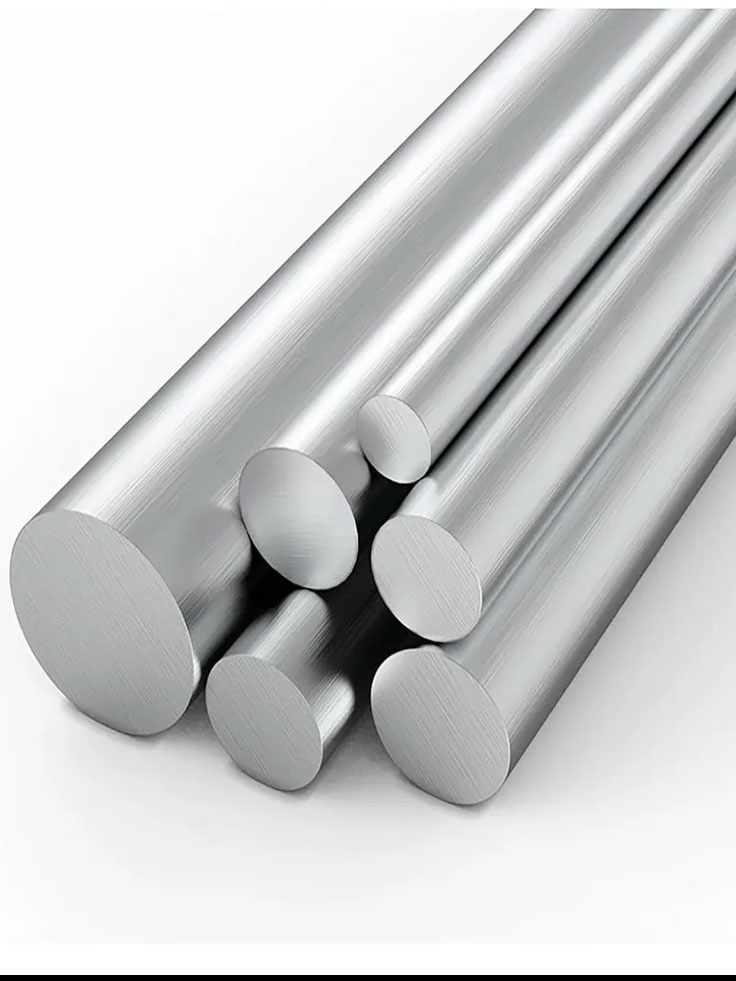
Grade 2 and Grade 5 share a name and very little else. One is soft, formable and outstandingly corrosion resistant; the other is three times stronger with a completely different set of processing rules. Defaulting to the stronger one is usually the wrong call.
Titanium Grade 2 and Titanium Grade 5 are both called titanium, and there the similarity largely ends. Grade 2 is commercially pure titanium — essentially unalloyed, single-phase alpha, soft, formable and outstandingly corrosion resistant. Grade 5 is Ti-6Al-4V, an alpha-beta alloy carrying 6% aluminium and 4% vanadium, with roughly three times the strength and a completely different set of processing rules.
Choosing between them is rarely difficult once the governing requirement is identified. The mistake is defaulting to Grade 5 because it sounds like the better material, then paying for strength that the application never uses and fighting formability that Grade 2 would have given for free.
| Property | Grade 2 (CP Ti) | Grade 5 (Ti-6Al-4V) |
|---|---|---|
| UNS number | R50400 | R56400 |
| Structure | Alpha (single phase) | Alpha-beta (two phase) |
| Tensile strength (min) | 345 MPa | 895 MPa |
| Yield strength (min) | 275 MPa | 828 MPa |
| Elongation (min) | 20% | 10% |
| Density | 4.51 g/cm³ | 4.43 g/cm³ |
| Heat treatable | No | Yes (solution treat & age) |
| Formability | Excellent, cold formable | Limited, usually hot formed |
| Weldability | Excellent | Good, requires strict shielding |
| Max continuous service | ~425 °C | ~400 °C |
| Relative cost | Lower | Higher |
Titanium's corrosion resistance comes from a tenacious, self-healing titanium dioxide film. Both grades form it, so both are effectively immune in seawater, wet chlorine, hypochlorite, nitric acid and most oxidising media. In practice Grade 2 is slightly better in strongly reducing conditions, because the aluminium and vanadium in Grade 5 introduce minor galvanic heterogeneity within the microstructure.
The practical conclusion is important: if corrosion is the only reason you are buying titanium, Grade 2 is the correct and cheaper answer. Grade 5 buys you strength, not better corrosion performance.
Specify Grade 2 when the enemy is the environment. Specify Grade 5 when the enemy is the load.
Both grades work-harden and hold heat at the cutting edge because titanium conducts heat poorly. Use sharp tooling, low surface speed, generous positive rake, heavy feed and flood coolant. Grade 5 is markedly harder on tooling than Grade 2. Never dwell in the cut — rubbing rather than cutting glazes the surface and destroys tool life.
Titanium absorbs oxygen, nitrogen and hydrogen above about 400 °C and turns brittle when it does. Both grades demand full argon shielding of the weld pool, the root and the trailing hot zone. The weld colour is your inspection: bright silver is acceptable, light straw is marginal, and blue, grey or white powder means the joint must be removed. Grade 5 additionally loses some ductility in the weld metal, so highly loaded Grade 5 joints are often designed as mechanical connections instead.
Grade 2 cold forms readily — allow for springback, which is greater than steel. Grade 5 is normally hot formed at 600–800 °C; cold forming it invites cracking.
Grade and the governing standard (ASTM B265 for sheet and plate, B348 for bar, B338 for tube, B381 for forgings, B363 for fittings), the required condition or temper, the size and quantity, and whether you need chemistry limits tighter than the standard minimum — oxygen content in particular, since it strongly controls strength and ductility in Grade 2. Confirm the certification type and whether third party inspection or an ELI (extra low interstitial) variant is required.
Custom fabrication, special sizes and complete export documentation are handled in house. Send us your drawing or specification and our technical team will come back with a detailed offer, usually within one working day.